
Bitcoin Going to Zero? Why People Are Searching This (And What It Really Means)

Bitcoin going to zero” is a phrase people search when the market drops fast and fear takes over.
If you typed “Bitcoin going to zero” into Google lately, you are not alone. That exact phrase has jumped to its highest search levels since 2022, according to reporting based on Google Trends. Decrypt
This kind of search spike usually happens for one reason: fear. Prices drop fast, headlines get louder, and people want an answer in plain words: Is this thing finished?
Let’s slow it down and talk about what “going to zero” actually means, why people panic-search it, what would need to happen for it to become real, and what is more likely to happen instead.
What “Bitcoin going to zero” actually means
When people say “Bitcoin will go to zero,” they mean the market price of 1 BTC would fall to $0. In real markets, that is not just “a big drop.” It would mean almost no one is willing to buy even a tiny amount at any price.
That’s a very extreme outcome. Bitcoin can fall a lot without going to zero. It has done that many times. Even in a bad bear market, there are usually still buyers. The price can go very low, but it usually doesn’t hit literal zero because someone somewhere is willing to buy small amounts at “cheap” prices.
So the real question is not “Can Bitcoin crash?” It can. The real question is: What could destroy demand so completely that buyers disappear?
Why the searches are spiking right now
Search spikes like this are a stress signal. They do not prove Bitcoin is dying. They prove that people are scared.
Recent reporting links the spike to weak sentiment across crypto markets. One widely used mood meter, the Crypto Fear & Greed Index, even flagged “Extreme Fear” during this period. Decrypt
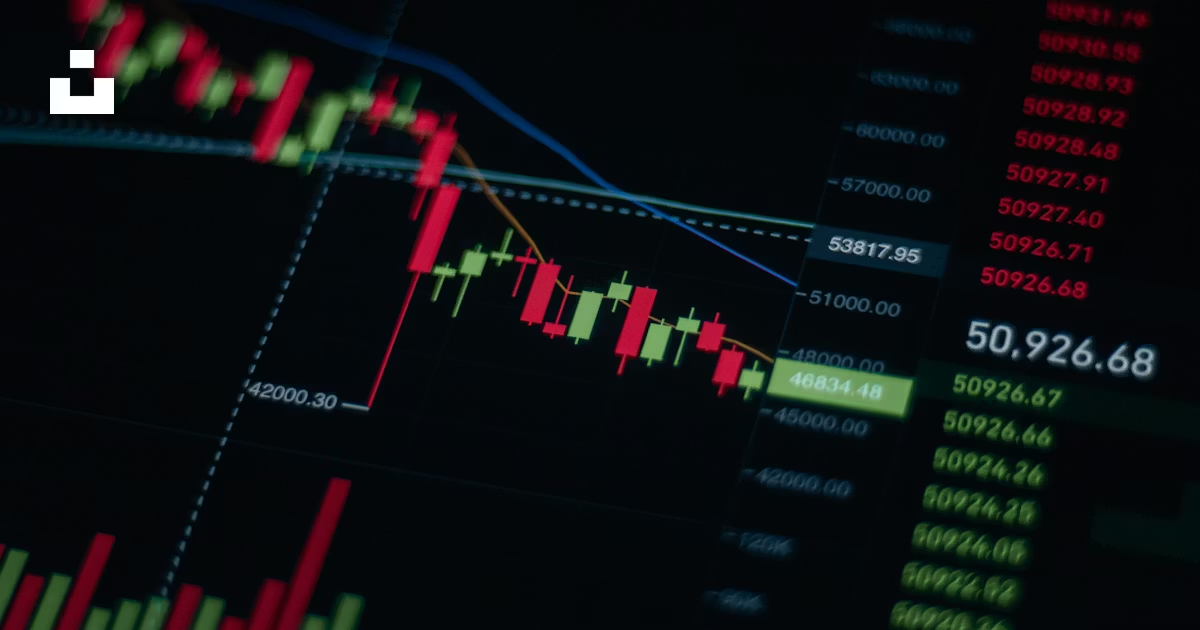
Also, when price moves sharply, “normal people” notice again. That brings in both curiosity and panic. CoinDesk reported Bitcoin climbing back above $70,000 after a sharp drop near $60,000 earlier in the month, which is exactly the kind of violent swing that triggers panic searches. CoinDesk
Big moves create three common reactions:
- Newcomers worry they bought the top.
- Old holders remember past crashes and feel that old fear again.
- People who never owned any want to know if this is their “cheap entry.”
That mix produces high search volume.
Three scary stories that could push Bitcoin toward zero
To be blunt: Bitcoin going to zero is unlikely, but it is not magic. It is software plus markets plus people. Extreme outcomes are possible. Here are the main “paths to zero” that serious people talk about.
1) A fatal technical break
If something broke at the core level—like a cryptography failure or a bug that cannot be fixed in time—confidence could collapse. If people believe the system can’t be trusted, demand can dry up fast.
This is rare, but it’s the cleanest theoretical path to “near zero,” because Bitcoin’s value depends heavily on trust in the system rules.
2) A global crackdown that shuts most real-world access
Bitcoin is traded because people can move between cash/banks and crypto exchanges. If major economies coordinated hard restrictions in a way that truly choked off on-ramps and off-ramps, demand could fall heavily.
Important detail: countries already regulate crypto in many ways. That alone didn’t kill it. For “zero,” it would need to be unusually coordinated and effective worldwide—much harder than it sounds.
3) A long-term security death spiral
Bitcoin’s network security is supported by miners. Miners spend money on electricity and hardware because block rewards and fees pay them. If price falls for a long time, mining becomes less profitable, some miners quit, and the network can become less secure. That can damage trust and push price lower, which can push more miners out.
That’s the “death spiral” idea people mention during fear phases. You’ll often see it referenced when market drops are sharp. (Some recent market coverage also framed worries around cascading effects and a “death spiral” narrative after big declines.) New York Post
Why “going to zero” is still not the base case
Now the other side—because your readers deserve a balanced view.
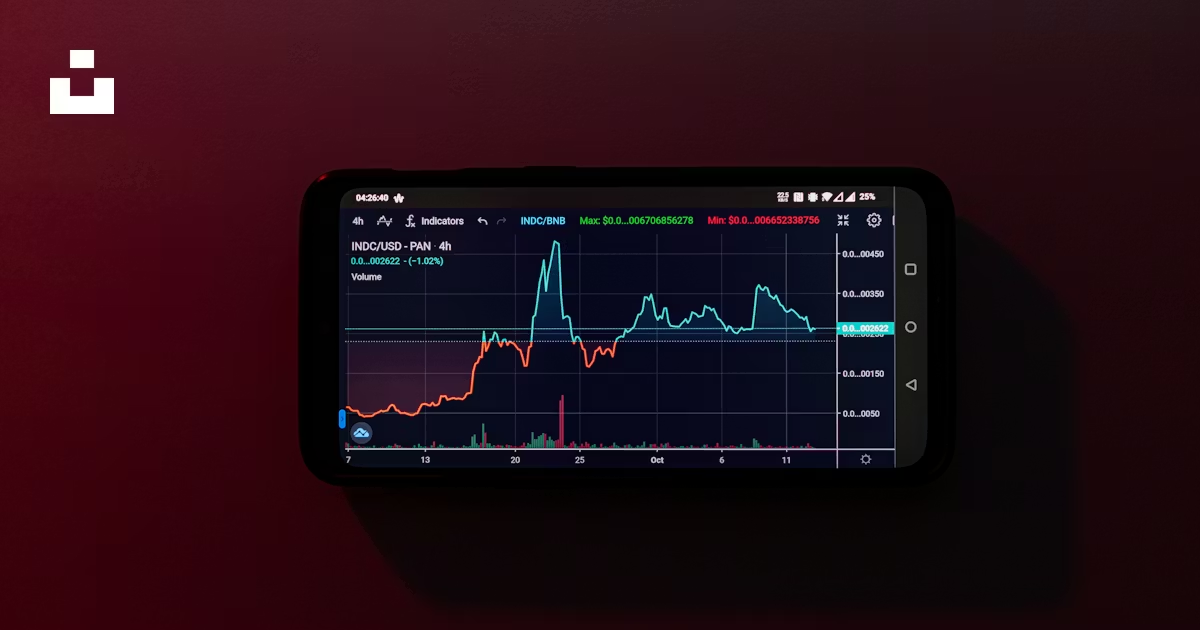
Bitcoin has a history of surviving brutal sentiment cycles. What’s happening now matches a familiar pattern: price drops → fear spikes → “Bitcoin is dead” searches rise → market eventually finds a level where buyers step in again. Decrypt
Also, many of these “doom searches” rise because people are emotional, not because new information proves the system is broken.
That’s why tools like the Fear & Greed Index exist: they try to measure the crowd mood using things like volatility and other signals. Alternative
But here’s the honest warning: an “Extreme Fear” reading does not guarantee a bounce. It just tells you people are scared. Kraken
What you can say in your article without overpromising
If you run a crypto news site, don’t write “Bitcoin won’t go to zero” like it’s a fact. That’s lazy.
A better, more honest framing is:
- “Zero is a tail risk—a rare extreme.”
- “Crashes are common. Total death is different.”
- “Search spikes show fear, not proof.”
That makes your article feel adult and credible.
What readers should do (simple, practical, not hype)
This part matters most, because panic makes people do dumb things.
If you already own Bitcoin
- Don’t make decisions while stressed. That’s how people sell bottoms.
- If you used leverage (borrowed money), reduce risk fast. Leverage turns normal drops into forced selling.
- Know your time horizon. Money you need this year should not be in highly volatile assets.
If you don’t own Bitcoin and you’re thinking of buying
- Don’t buy because you saw a scary headline. That’s how you get manipulated.
- Start small. The goal is to learn without blowing up your savings.
- Avoid “get rich quick” tokens while you’re in fear mode. Fear makes you chase stupid bets.
For everyone
- Be careful with misinformation. During fear spikes, fake screenshots and “insider” rumors spread fast because people want certainty.

The clean conclusion
People search “Bitcoin going to zero” when they feel trapped: trapped in a losing position, trapped by regret, or trapped watching a market move too fast.
The search trend is real, and it’s high again. Decrypt
But the phrase is mostly a mirror of emotion. The more useful question is: What is actually breaking right now—technology, access, or trust? If the answer is “nothing fundamental,” then “zero” is probably fear talking.
That doesn’t mean price can’t fall more. It can. It means you should separate a crash from a collapse.
This article is for information, not financial advice.